W3C Organisation and WCAG Standard – What Are They and Why Should Book Publishers Know Them?
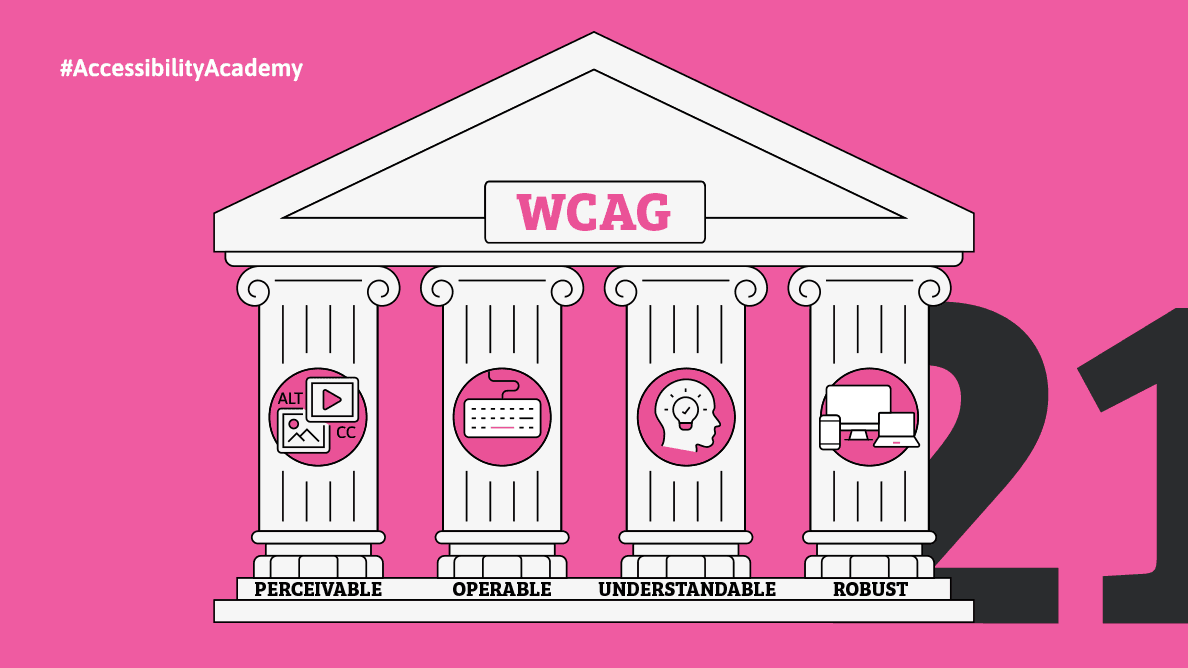
When we talk about digital accessibility, one of the first terms that comes up is WCAG. This is a set of guidelines created by the W3C – the World Wide Web Consortium. For years, this organization has been setting standards that make the internet and digital content more accessible, readable, and universal.
For the book industry, which increasingly relies on digital publishing, the roles of W3C and WCAG are becoming crucial. They are no longer technical curiosities – they are the foundations of quality and equal access to content.
A Brief History: How the W3C Defined the Rules of the Internet
W3C was founded in October 1994 by Tim Berners-Lee, the inventor of the World Wide Web, when the Internet was just beginning to become a commonly-used tool.
Interestingly, the organism was created with the support of the European Commission and DARPA (a US research agency).
Currently, W3C has over 350 member organizations from around the world, and the W3C team consists of approximately 50 employees (plus host contributors).
The organization's goal is to create uniform, open standards that will allow various systems, devices, and technologies to work well together. From the very beginning, the idea of accessibility was strongly present in these efforts: the web was to be "for everyone."
The first version of WCAG, or Web Content Accessibility Guidelines, appeared in 1999. It was the first formal set of rules describing which elements of websites and digital content make them accessible. Over time, the standard has evolved alongside technology:
1999 – WCAG 1.0
2008 – WCAG 2.0 (still used today in many legal regulations)
2018 – WCAG 2.1 (extension concerning the needs of mobile users and additional requirements)
2023 – WCAG 2.2 (another update, including navigation and interaction issues)
It is worth mentioning that on 1 January, W3C was transformed into a non-profit public organization, which formally makes it independent and strengthens its mission to serve the public good of the Internet.
Currently, W3C is working on WCAG 3.0, which will be even more universal and open also to non-internet content.
Four Pillars of Accessibility
The latest version of the standard, WCAG 2.2, includes thirteen guidelines organized around the four core accessibility principles. These are:
perceivable – the content must be presented in a way that the user can perceive with various senses,
operable – the interface and navigation must be operable using various methods,
understandable – information and the way of using the content should be clear and legible,
robust – in Polish and EU regulations also referred to as compatibility, i.e. the ability of content to work with various devices and assistive technologies.
These aren't purely technical principles. At their core, they address the diverse ways people interact with digital content. The standard addresses the needs of users who:
cannot see and navigate websites using screen readers,
cannot use a mouse and only use the keyboard,
need to enlarge the text or change the colours to improve readability,
używają technologii asystujących umożliwiających nawigację lub odczyt treści.
use assistive technologies that enable navigation or reading of content.
Each of the four principles translates into specific requirements—thirteen in total—that describe how to design content that is accessible and resistant to technological change.
Why W3C and WCAG Have Become So Important for the Book Market
Not many years ago, publishers treated accessibility as a minor issue. Today—especially in the context of European regulations—it is one of the pillars of digital publishing. In practice, the W3C and WCAG have become global standards for how to prepare content to be accessible to people who are blind, visually impaired, or have cognitive or motor disabilities.
This is of particular importance for ebooks, bookstore websites, sales platforms, online readers and educational publications.
The fact that these standards are open is also of significant importance: W3C documents are publicly available, so they can be used by content creators, publishers and developers without licensing fees – which facilitates the implementation of good accessibility practices also in the digital book sector.
How WCAG Guidelines Translate into Book Content
WCAG doesn't directly describe how to create ebooks. But it does describe something more important: a model for accessible digital content. And this model also works perfectly for the book market.
Some key areas:
Structure
In ebooks, logical organization of content is crucial. Headings, tables of contents, sections – all of this stems directly from the principles of "operable" and "perceivable." Screen readers need something to navigate.
Text alternatives
WCAG clearly states: all non-text content should be described verbally. In practice, this means describing graphics, illustrations, charts, tables, photos, and diagrams. For educational books, this is absolutely essential.
Contrast and readability
This applies not only to websites but also to fixed-layout publications and all publisher promotional materials. Text must be legible, high-contrast, and appropriately spaced.
Navigation accessible for everyone
What a table of contents solves in paper books is functional in e-books. The reader needs to know where chapters begin, sections end, footnotes, and tables are. WCAG suggests how to create logical and intuitive interactions.
Possibility to zoom, change orientation, adjust
WCAG guidelines address content flexibility. Designing a publication so that it doesn't fall apart when the text is enlarged or the font is changed is a fundamental element of the standard.
WCAG in Publishing Practice: Why It's Worth It
The W3C guidelines aren't just a collection of dry recommendations. For publishers, they're a real tool that helps publications become:
more inclusive
legally compliant (especially in light of the European Accessibility Act)
immune to future technological changes
more professional and competitive
The digital book market is maturing. And publishers who currently work in accordance with W3C and WCAG standards will be at the forefront of the market in a few years—ready for new technologies, new formats, and new readerships.
Bibliography:
https://www.gov.pl/web/dostepnosc-cyfrowa/wcag-21-w-skrocie
https://www.w3.org/WAI/standards-guidelines/wcag/pl
https://studioskladam.pl/kompendium-wcag-ebook/
https://www.netkoncept.com/92/48/poradnik-wcag-21.html
https://www.streetlib.com/accessible-ebooks?lang=en
https://elearning.adobe.com/2025/08/inclusive-interactive-ebooks-a-guide-to-accessible-elearning/
https://www.w3.org/TR/epub-a11y-11/
https://daily.dev/blog/self-publishing-accessible-ebooks-ada-compliance-guide
About the Author
Monika Zarczuk-Engelsma
Content Creation Specialist at the Polish Foundation for the Blind and Visually Impaired “TRAKT”
Has a degree in Polish philology (Academy of Podlasie) and a postgraduate diploma in Partner Marketing and Public Relations (University of Gdańsk). Took part in projects concerning learning to use a computer by blind individuals, conducted training on volunteer programmes for blind people, was part of the European Voluntary Service project (organised by the EU) and received an internship offer at the European Economic and Social Committee. In her daily life she uses braille, but also an Iphone with voiceover and a laptop with a speaking screen reader. This enables her to achieve a high degree of self-reliance and she is able to function in the way that suits her best: spend time on active and interesting activities, meet new people, work, read books, or pursue her hobbies, i.e. chess, board and card games and travelling. She has already visited more than 30 countries.
